
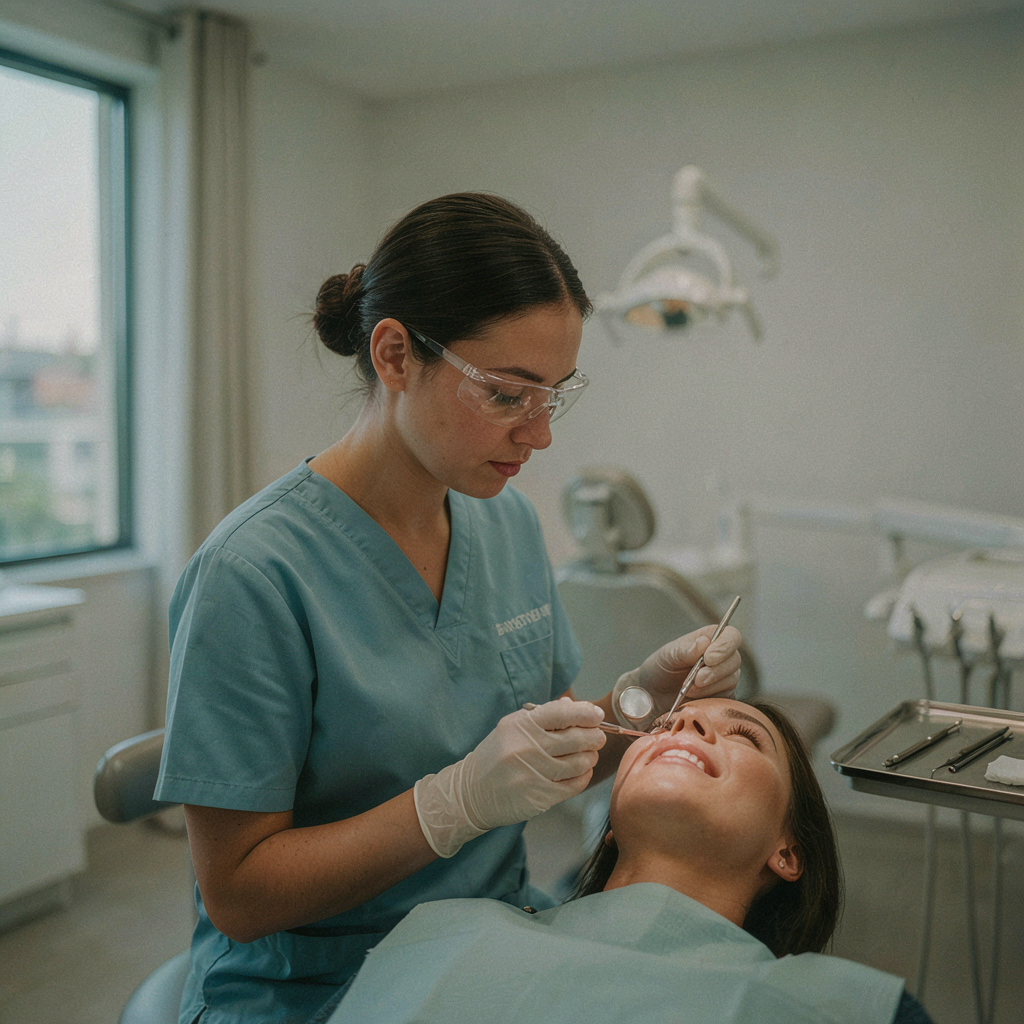
If your dentist has mentioned that you may need a dental restoration, you might be wondering whether that means a crown, an inlay or something else entirely.
The terms can sound similar at first. Both treatments can be used to repair a damaged tooth, both may be made from tooth-coloured materials, and both are designed to restore the tooth’s shape and function.
However, they are not the same treatment.
The main difference is how much of the tooth needs to be repaired or covered. An inlay restores part of the tooth, while a crown covers the entire visible portion of the tooth. Which option may be suitable depends on the extent and location of the damage, how much healthy tooth structure remains and the forces placed on the tooth when you bite and chew.
It is not usually a decision based on appearance alone. A dentist needs to assess the tooth properly and may recommend an X-ray to better understand what is happening beneath the surface.
At Cairns Family & Cosmetic Dental Group, restoration recommendations are based on an individual assessment of the tooth, your bite and your overall oral health.
Here is how a dental inlay and crown differ and what your dentist may consider when deciding which restoration could suit your tooth.
What Is a Dental Inlay?
A dental inlay is a type of partial tooth restoration.
Rather than covering the entire tooth, an inlay is designed to fit within the prepared area of the biting surface, usually between the cusps—the raised points on the chewing surfaces of back teeth.
An inlay may be considered when a tooth has moderate decay or damage but still has enough healthy structure to support a smaller restoration. In some cases, this means the tooth needs more support than a conventional filling can provide but may not require the full coverage of a crown.
A filling is usually placed directly into a prepared cavity and shaped by the dentist. An inlay, by comparison, is a custom-made restoration designed to fit the prepared area of the tooth.
Where clinically appropriate, an inlay can allow more healthy tooth structure to be retained than a full crown.
Some ceramic inlays can also be produced using CEREC technology. Digital scanning and computer-aided design allow the restoration to be designed and milled within the dental practice, and in suitable cases it may be fitted during the same visit.
However, not every damaged tooth is suitable for an inlay. If the damage is extensive, the cusps are weakened or cracked, or there is insufficient healthy tooth structure remaining, another restoration may be more appropriate.
What Is a Dental Crown?
A dental crown covers the entire visible portion of a tooth.
It is sometimes described as a cap because it fits over the prepared natural tooth. A crown can help restore the tooth’s shape, size and function while providing broader coverage of weakened tooth structure.
The Australian Dental Association explains that crowns may be recommended for teeth that are badly broken, cracked or affected by decay, as well as for some teeth that have undergone root canal treatment. Australian Dental Association information about dental crowns
A dentist may consider a dental crown when a tooth has been significantly weakened by factors such as:
- Extensive tooth decay
- A large or failing filling
- A fracture or crack
- Loss of one or more cusps
- Significant tooth wear
- Dental trauma
- Previous root canal treatment in appropriate cases
Because a crown covers the whole visible portion of the tooth, it generally requires more tooth preparation than an inlay.
That does not make a crown a worse option. It simply means the two restorations are designed for different clinical situations.
If a tooth has already lost a significant amount of healthy structure, a smaller restoration may not provide enough support. In that situation, broader coverage with a crown may be considered.
Treatment suitability depends on an individual dental assessment.
Dental Inlay vs Crown: What Is the Main Difference?
The simplest distinction is the amount of the tooth covered by the restoration.
An inlay restores a selected area within the tooth, usually while retaining the surrounding cusps.
A crown covers the entire visible part of the tooth and may be considered when broader structural support is needed.
Neither treatment is automatically better than the other. The goal is to choose an appropriate restoration for the condition of the individual tooth while preserving healthy tooth structure where possible.
Crown or Inlay: How Does a Dentist Decide?
Choosing between a crown and an inlay is not a one-size-fits-all decision.
Your dentist will assess several clinical factors before recommending treatment. The dentists at Cairns Family & Cosmetic Dental Group can examine the tooth, discuss your symptoms and explain which restoration options may be suitable for your circumstances.
How Much Healthy Tooth Structure Remains?
One of the most important considerations is how much strong natural tooth remains.
If enough stable tooth structure surrounds the damaged area, an inlay may be an option. If much of the tooth has been weakened, fractured or previously restored, a crown may provide more appropriate coverage.
Where Is the Damage Located?
Damage that is mainly contained within the biting surface may sometimes be suitable for an inlay.
If the damage extends into the cusps, sides or outer walls of the tooth, broader coverage may need to be considered.
Is the Tooth Cracked or Heavily Filled?
A tooth with a large existing filling may have relatively little natural structure remaining.
If a large filling breaks down or the surrounding tooth develops a crack, replacing it with another filling or an inlay may not always provide the support the tooth needs.
Has the Tooth Had Root Canal Treatment?
Some teeth that have undergone root canal treatment can be more vulnerable to fracture, particularly when substantial tooth structure was already lost before treatment.
Depending on the tooth, its location and how much structure remains, a dentist may recommend a crown or another restoration to protect it.
This does not mean every root canal-treated tooth automatically needs the same treatment. An individual assessment is necessary.
What Forces Does the Tooth Experience?
Back teeth are exposed to considerable pressure when chewing.
Your dentist may consider:
- The location of the tooth
- Your bite
- Whether you clench or grind your teeth
- The amount of tooth structure remaining
- The restoration material being considered
These factors can influence whether an inlay, crown or another restoration may be appropriate.
What Is the Condition of the Rest of Your Mouth?
The tooth cannot be considered entirely in isolation.
Your dentist may also assess:
- Gum health
- Nearby teeth
- Tooth decay risk
- Oral hygiene
- Bite alignment
- Existing dental restorations
- Grinding or clenching habits
This is why an in-person dental assessment is important. Two teeth can look similar from the outside while having very different levels of damage underneath.
When Might a Dental Inlay Be Used?
An inlay may be considered when damage is moderate and largely contained within the chewing surface of a tooth.
For example, a back tooth may have decay or a damaged filling that requires more restoration than a simple filling but still has strong surrounding cusps and walls.
An inlay may also be useful when a precisely shaped, custom-made restoration is appropriate for the prepared area.
Ceramic inlays can often be made to blend with the surrounding natural tooth colour, although the final appearance depends on factors including the tooth, material and individual clinical situation.
One potential advantage of an inlay is conservation of tooth structure. Where appropriate, it may repair the damaged area without requiring the preparation associated with full crown coverage.
However, if the cusps are cracked, the tooth is substantially weakened or the remaining structure cannot safely support the expected biting forces, an inlay may not be suitable.
When Might a Dental Crown Be Used?
A crown may be considered when a tooth requires more extensive coverage and support.
Possible situations include a tooth with:
- A significant fracture
- Extensive decay
- A very large existing filling
- One or more damaged cusps
- Substantial structural weakness
- Certain types of cracks
- Previous root canal treatment where additional protection is indicated
A crown surrounds the visible portion of the tooth rather than repairing only the central damaged area.
For example, if a molar has a large filling and weakened outer walls, restoring only the centre of the tooth may not adequately address the remaining structure. A crown may provide broader coverage if your dentist considers that clinically appropriate.
However, a weakened tooth does not automatically require a crown. Your dentist should assess whether enough healthy structure remains for a more conservative restoration or whether full coverage is appropriate.
Are Inlays and Crowns Made From the Same Materials?
The materials used for inlays and crowns can vary.
Depending on the restoration and clinical requirements, options can include:
- Ceramic
- Porcelain
- Zirconia
- Metal alloys
- Other dental restorative materials
Your dentist can recommend materials based on factors such as the position of the tooth, remaining tooth structure, bite forces, appearance and other individual considerations.
CEREC Ceramic Restorations
CEREC uses digital scanning and computer-aided design and manufacturing to create certain restorations from dental material blocks.
In suitable cases, ceramic inlays and same-day dental crowns may be designed, milled and fitted during a single appointment.
Traditional crowns may instead be manufactured by a dental laboratory, generally requiring an impression or digital scan and a later appointment for placement.
The Australian Dental Association notes that some dentists offer same-day crown treatment, while more traditional crown workflows commonly involve laboratory manufacture. Australian Dental Association guidance on crowns and same-day treatment
The appropriate technique and material depend on the individual tooth and clinical circumstances.
How Long Do Dental Inlays and Crowns Last?
There is no single lifespan that applies to every inlay or crown.
Longevity can be influenced by factors including:
- The restoration material
- The amount of remaining tooth structure
- The size and location of the restoration
- Bite forces
- Grinding and clenching
- Oral hygiene
- Diet
- Gum health
- Regular dental reviews
Dental restorations should not be considered permanent or guaranteed for a specific number of years.
Over time, a restoration may wear, chip, fracture or loosen, while the natural tooth around its edges can still be affected by tooth decay.
The Australian Dental Association notes that teeth with crowns still require ongoing care and that crowns can sometimes chip, fracture or need replacement. Advice on caring for crowns from the Australian Dental Association
Regular dental examinations allow the dentist to monitor the restoration, surrounding tooth structure, margins, bite and gums.
How Do You Care for an Inlay or Crown?
Home care remains important regardless of whether you have an inlay or crown.
Helpful habits include:
- Brushing twice daily with fluoride toothpaste
- Cleaning between your teeth every day
- Cleaning carefully around restoration margins
- Avoiding chewing ice and other very hard objects
- Avoiding using your teeth to open packaging
- Mentioning grinding or clenching to your dentist
- Attending dental examinations at intervals recommended for you
- Having new pain, sensitivity or bite changes assessed
Healthdirect advises that brushing and cleaning between the teeth are important for reducing plaque and tooth decay risk. Healthdirect guidance on dental care and teeth cleaning
Although restorative materials themselves do not develop tooth decay in the same way natural enamel does, the natural tooth surrounding a restoration can still be affected.
What Happens During a Dental Inlay or Crown Assessment?
Whether an inlay or crown is ultimately recommended, treatment normally begins with an assessment.
Your dentist may:
- Ask about your symptoms and dental history.
- Examine the tooth and surrounding gums.
- Assess existing fillings or restorations.
- Check your bite.
- Take an X-ray where clinically indicated.
- Evaluate how much healthy tooth structure remains.
- Discuss appropriate treatment options, materials and alternatives.
The aim is to understand the condition of the tooth before recommending a particular restoration.
What Happens If You Need an Inlay?
If an inlay is considered appropriate, the damaged or decayed area is prepared while retaining suitable healthy tooth structure.
The restoration is then made to fit the prepared area.
Depending on the technique being used, this may involve a digital scan or impression. With suitable same-day CEREC treatment, a ceramic restoration may be digitally designed, milled and fitted during the same appointment.
The process varies according to the tooth and the individual treatment plan.
What Happens If You Need a Crown?
If a crown is recommended, the tooth is prepared to create sufficient space for the restoration.
A digital scan or impression is then taken so that the crown can be designed to fit the prepared tooth.
Depending on the case and technology being used, the crown may be:
- Produced and fitted on the same day, or
- Manufactured by a dental laboratory and fitted at a subsequent appointment
Your dentist should explain the treatment process, expected appointments, costs, maintenance requirements and any relevant risks or alternatives before treatment.
What If Your Tooth Hurts After a Restoration?
Some people notice temporary sensitivity after restorative dental treatment. However, the cause and significance of symptoms vary.
Contact your dentist if you experience:
- Persistent or worsening pain
- Pain when biting or chewing
- A bite that feels noticeably high or uneven
- Increasing sensitivity
- Swelling around the tooth or gum
- A restoration that feels loose or damaged
These symptoms do not necessarily mean the restoration has failed, but they should be assessed if they persist or concern you.
Healthdirect recommends seeking dental care for persistent toothache or gum swelling, as these symptoms can have several possible dental causes. Healthdirect information about toothache and gum swelling
Getting an Assessment That Suits Your Tooth
If you live in Earlville, Mount Sheridan or a nearby Cairns suburb and have been told that you may need a dental restoration, the most useful next step is an individual dental assessment.
Trying to decide between an inlay and crown from symptoms alone is difficult. A tooth that feels relatively comfortable may still have a crack or weakened structure, while another sensitive tooth may require a different type of treatment.
An examination, and an X-ray where appropriate, allows your dentist to assess what is happening beneath the visible surface.
At Cairns Family & Cosmetic Dental Group, the dental team can assess the extent of damage, remaining tooth structure, bite and other oral-health factors before discussing suitable options.
Treatment recommendations depend on the condition of your individual tooth rather than simply choosing the smallest or largest restoration available.
The Bottom Line: Dental Inlay vs Crown
Dental inlays and crowns can both be used to restore damaged teeth, but they serve different purposes.
An inlay may be considered when damage is moderate and sufficient healthy tooth structure remains to support a partial restoration.
A crown may be considered when a tooth is more extensively weakened and requires broader coverage.
Neither option is automatically better. The appropriate choice depends on your tooth, bite, oral health and other individual clinical factors.
If you have a damaged tooth or have been told you may need a restoration, contact Cairns Family & Cosmetic Dental Group to arrange an assessment and discuss your options.
Patients can also book directly with our Earlville dental practice or Mount Sheridan dental practice. A dentist can assess the tooth and explain whether an inlay, crown or another treatment may be appropriate for your needs.
FAQs About Dental Inlays and Crowns
Is an inlay always better than a crown?
No. An inlay may be suitable when a tooth has moderate damage and enough healthy structure remains, while a crown may be more appropriate when the tooth is extensively weakened and needs broader coverage. The appropriate restoration depends on an individual dental assessment.
How long does a CEREC inlay take to fit?
In suitable cases, a CEREC inlay may be digitally designed, milled and fitted during a single appointment. However, treatment time and suitability vary according to the tooth, restoration and individual circumstances.
Does getting a crown mean more of my tooth needs to be removed?
Generally, a crown requires more tooth preparation than an inlay because it covers the entire visible portion of the tooth. An inlay usually restores a smaller area. The amount of preparation required depends on the condition of the individual tooth and the restoration being used.
Can a tooth that has had root canal treatment have an inlay instead of a crown?
Possibly, but suitability depends on factors such as which tooth was treated, how much healthy structure remains, existing cracks or fillings and the forces placed on the tooth. A dentist needs to assess the tooth before recommending an inlay, crown or another restoration.
How do I know whether I need a dental inlay or crown?
An in-person dental examination is needed to determine which restoration may be appropriate. Your dentist can assess the extent of the damage, remaining healthy tooth structure, bite and other clinical factors and may recommend an X-ray where appropriate.
Is a dental crown stronger than an inlay?
A crown provides more extensive coverage than an inlay, but that does not mean a crown is automatically the better or stronger choice for every tooth. The most appropriate restoration depends on the remaining tooth structure, location, bite forces, material and individual clinical circumstances.
How long do dental inlays and crowns last?
There is no guaranteed lifespan for either restoration. Longevity varies according to the material, tooth condition, bite, grinding or clenching habits, oral hygiene and ongoing dental care. Regular dental reviews can help monitor both the restoration and the natural tooth around it.
Can decay develop under an inlay or crown?
The restoration material itself does not develop tooth decay, but the natural tooth around its margins can still be affected by decay. Regular brushing, cleaning between the teeth and dental reviews remain important after restorative treatment.