
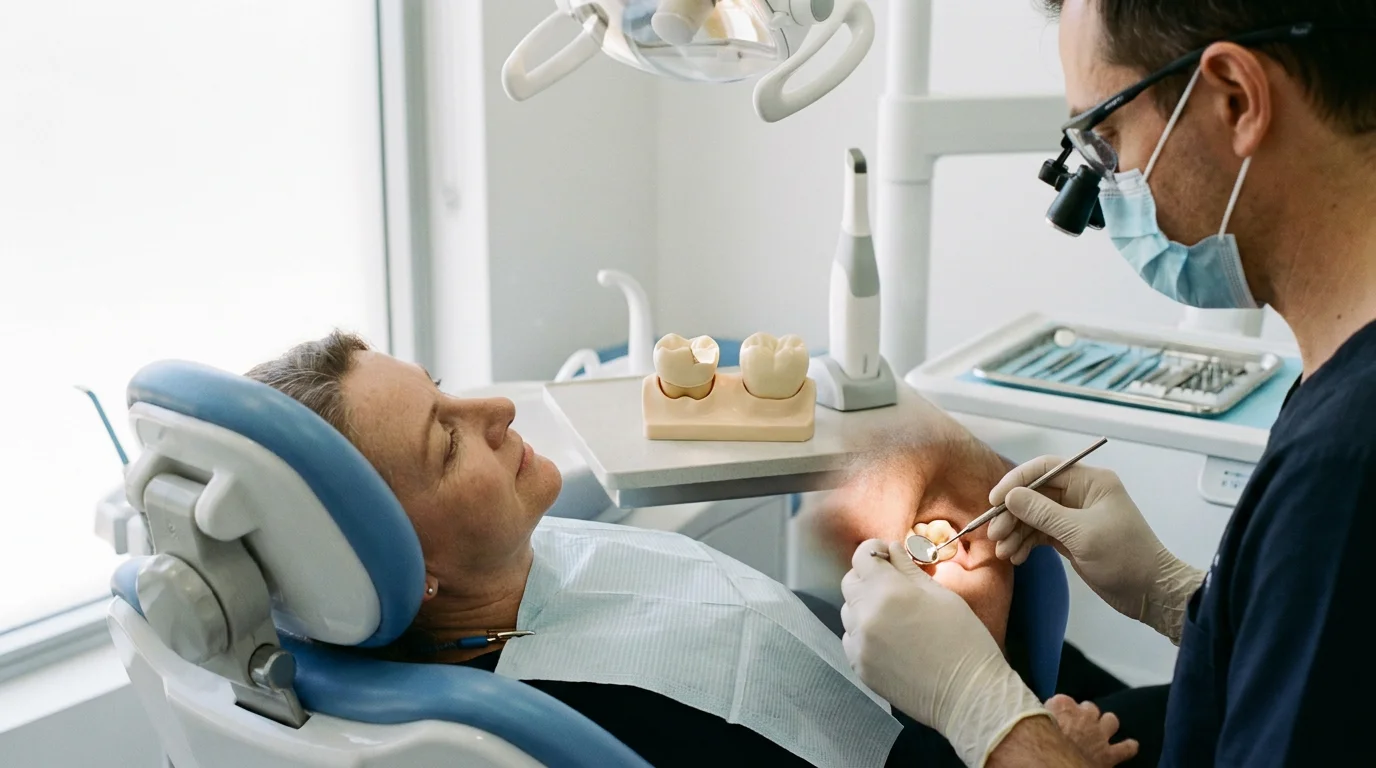
A dental crown is designed to cover and protect a tooth that has been damaged, weakened or heavily restored. However, crowns can still chip, crack, loosen, wear down or occasionally break.
If you are looking into broken dental crown repair, whether the crown can be repaired depends on factors such as the type and extent of damage, the crown material, the condition of the tooth underneath and how well the crown still fits.
A small chip may sometimes be polished or repaired. A crown with significant cracking, poor fit or damage that compromises its seal may need replacement instead. If the crown is loose, has fallen off or leaves the underlying tooth exposed, it should be assessed by a dentist.
At Cairns Family & Cosmetic Dental Group, patients in Earlville, Mount Sheridan and surrounding Cairns areas can have a damaged crown assessed before deciding whether repair, recementation, replacement or treatment of the underlying tooth may be appropriate.
What Is a Dental Crown?
A dental crown is a custom-made restoration that covers the visible part of a tooth.
A dentist may recommend a crown when a tooth has lost a significant amount of structure or requires additional protection. This can occur after:
- A large filling
- Tooth fracture
- Significant tooth decay
- Root canal treatment
- Heavy tooth wear
- Other structural damage
A crown is designed to restore the shape and function of a tooth while protecting the remaining tooth structure. However, like other dental restorations, crowns can wear, loosen or become damaged over time.
Healthdirect Australia provides further patient information about the dental crown procedure, including common reasons crowns are used and potential complications.
You can also find information about dental crowns at Cairns Family & Cosmetic Dental Group.
Can a Broken Dental Crown Be Repaired?
Sometimes, but not every damaged crown can or should be repaired.
A minor chip or rough edge may sometimes be polished or repaired with a dental material, depending on:
- The size of the damaged area
- The crown material
- Where the damage is located
- Whether the crown remains securely attached
- Whether the seal around the tooth is intact
- How the crown contacts the opposing teeth
More extensive damage may require crown replacement.
For example, replacement may be considered when a crown is:
- Significantly cracked
- Broken into several pieces
- Repeatedly coming loose
- Poorly fitting
- No longer sealing the underlying tooth
- Extensively worn or chipped
- Associated with decay or fracture beneath the crown
Importantly, the dentist needs to assess both the crown and the tooth underneath it.
A visible chip may be only part of the problem. In some cases, the underlying tooth may have decay, a fracture or another issue that needs to be treated before a crown can be repaired or replaced.
Common Types of Dental Crown Damage
Not all crown damage is the same. The type and extent of damage can influence the treatment options available.
Small Chip in a Dental Crown
A small chip may feel rough or sharp against your tongue or cheek.
If the crown otherwise remains stable and the damage does not significantly affect its structure, fit or bite, the dentist may be able to smooth the area.
In selected cases, a tooth-coloured material may be used to repair a small defect.
Whether this is appropriate depends on the crown material, position of the chip and forces placed on the restoration.
Cracked Dental Crown
A cracked crown should be professionally assessed.
Some cracks affect only the surface, while others may extend more deeply and compromise the crown’s strength or its seal around the tooth.
Continuing to chew heavily on a significantly cracked crown may allow the damage to worsen.
If the crack compromises the restoration, replacement may be recommended rather than attempting a repair that is unlikely to remain reliable.
Loose Dental Crown
A loose crown may move slightly when you chew or when it is touched.
You may also notice:
- Sensitivity
- Food trapping
- An unusual taste
- Gum irritation
- Discomfort when biting
- A change in the way your bite feels
A loose crown should be assessed promptly.
If the restoration is undamaged, still fits accurately and the underlying tooth remains healthy, recementation may sometimes be possible.
However, if decay, tooth fracture or another problem is present underneath, that issue needs to be addressed first.
Crown That Has Fallen Off
If a crown comes off completely, keep it in a safe container and bring it to your dental appointment.
The dentist can examine both the restoration and the underlying tooth to determine whether the crown can be reused.
Do not use household glue to put the crown back on. Household adhesives are not designed for dental use and may complicate treatment.
Until you can see a dentist, try to keep the area clean and avoid chewing heavily on the exposed tooth.
Broken Crown With Tooth Pain
Pain associated with a damaged crown can indicate a problem involving the crown, the underlying tooth or surrounding tissues.
Symptoms may include:
- Pain when biting
- Sensitivity to hot or cold
- Throbbing pain
- Gum tenderness
- Swelling
These symptoms have several possible causes and should not be self-diagnosed.
The dentist may need to assess the tooth for problems such as decay, fracture, inflammation or infection before deciding how the crown should be managed.
Why Do Dental Crowns Break?
Crowns are designed to tolerate normal biting and chewing forces, but they are not indestructible.
Possible causes of damage include:
- Biting unexpectedly hard foods or objects
- Grinding or clenching
- Dental trauma
- Long-term wear
- Decay developing around the crown margin
- Breakdown of dental cement
- Changes in the fit of the restoration
- Extensive loss of supporting tooth structure
- Wear or fracture of the crown material
Sometimes a crown breaks suddenly. In other situations, smaller warning signs appear first.
You may notice:
- A rough edge
- Food catching around the crown
- Mild sensitivity
- A change in your bite
- Slight movement
- A small visible chip
Having these changes assessed early may allow your dentist to determine whether a simple adjustment is possible or whether further treatment is required.
What Should You Do If Your Dental Crown Breaks?
If you notice that a crown is damaged, arrange a dental appointment.
Even when there is no pain, the restoration should be checked to determine whether it is still protecting the underlying tooth adequately.
While waiting for your appointment:
- Avoid chewing hard foods on the affected side where practical.
- Keep the area clean with gentle brushing.
- Keep any pieces of the crown that have broken away.
- If the entire crown comes off, store it safely and bring it to your appointment.
- Do not use household glue to reattach it.
- Seek prompt dental advice if you develop significant pain or swelling.
Contact a dentist promptly if you experience symptoms such as increasing swelling, severe pain, discharge, fever or difficulty opening your mouth.
Significant facial swelling or problems breathing or swallowing require urgent medical or dental care.
How Does a Dentist Assess a Broken Crown?
Before recommending broken dental crown repair or replacement, the dentist needs to understand what has happened to both the restoration and the underlying tooth.
An assessment may include:
- Examining the crown
- Checking whether it moves
- Looking for chips and cracks
- Examining the crown margins
- Checking for exposed tooth structure
- Assessing the surrounding gums
- Examining how your teeth meet
- Taking a dental X-ray when appropriate
The aim is not simply to repair what is visible.
For example, a crown may have become damaged because of grinding, excessive bite pressure or deterioration of the tooth underneath. Addressing the underlying cause can be important when planning further treatment.
The dentists at Cairns Family & Cosmetic Dental Group can assess the crown, underlying tooth and bite before recommending an appropriate treatment approach.
Broken Dental Crown Repair Options
Treatment depends on the condition of the crown and tooth.
Polishing or Smoothing
If the damage is very small and the crown remains structurally sound, the dentist may be able to smooth a rough or sharp area.
This may be considered for a minor surface defect that does not compromise the strength, fit or seal of the restoration.
Bonded Crown Repair
Some small chips may be repairable using tooth-coloured restorative material.
A bonded repair may be suitable in selected situations, but its durability depends on factors including:
- Crown material
- Location of the defect
- Size of the chip
- Bite forces
- Available bonding surface
A repaired area may not have the same properties as the original crown material, so your dentist can explain the limitations before recommending this approach.
Recementing a Crown
If a crown has loosened or fallen off but remains intact, recementing it may sometimes be possible.
The dentist first needs to determine whether:
- The crown still fits accurately
- The underlying tooth is intact
- There is no significant decay
- The crown itself is undamaged
- The bite remains suitable
A crown should not simply be cemented back in place if there is untreated damage underneath it.
Replacing a Dental Crown
Replacing the crown may be recommended when repair is unlikely to provide a suitable result.
Reasons may include:
- Significant cracking
- Extensive chipping
- A poor fit
- Loss of an adequate seal
- Excessive wear
- Repeated loosening
- Changes to the underlying tooth
- Damage that affects function or bite
Dental crowns are long-term restorations, but no crown can be guaranteed to last indefinitely.
If replacement is recommended, your dentist can explain the available materials, treatment process and factors relevant to your tooth.
Treating the Tooth Underneath
Sometimes the crown is not the only issue.
If the underlying tooth has developed problems, treatment may need to occur before a new crown can be fitted.
Depending on what the dentist finds, this could involve:
- Removing tooth decay
- Rebuilding lost tooth structure
- Assessing a suspected crack
- Treating gum problems
- Considering root canal treatment if clinically indicated
- Discussing other options if the tooth cannot be appropriately restored
The appropriate treatment depends on the condition of the individual tooth.
Can You Keep Eating With a Broken Crown?
It is generally sensible to be cautious until the crown has been assessed.
If a restoration is chipped, cracked or loose, chewing heavily on that tooth may worsen the damage or place additional pressure on the underlying tooth.
Until your appointment:
- Avoid very hard foods on the affected side
- Avoid particularly sticky foods that could dislodge a loose crown
- Choose softer foods if the tooth is sensitive
- Keep the area clean
- Brush gently around the crown
If the crown has completely fallen off, the prepared tooth underneath may feel sensitive to temperature or pressure.
Arrange a dental assessment rather than continuing to use the tooth normally for an extended period.
Is a Broken Crown Always Painful?
No.
Some broken crowns cause no pain, particularly if the damage is small or the underlying tooth remains adequately covered.
However, lack of pain does not confirm that the crown or tooth is healthy.
A crown may be loose, cracked or no longer sealing the tooth properly without producing immediate discomfort.
For this reason, visible crown damage or changes in fit should be assessed even when the tooth does not hurt.
How to Reduce the Risk of Dental Crown Damage
It is not possible to prevent every problem with a dental crown, but sensible dental care may reduce avoidable stress on the restoration.
Helpful habits can include:
- Avoiding chewing ice
- Avoiding biting pens or other hard objects
- Avoiding using teeth to open packaging
- Brushing twice daily with fluoride toothpaste
- Cleaning between your teeth regularly
- Cleaning carefully around crown margins
- Wearing an occlusal splint or night guard if your dentist recommends one for grinding or clenching
- Attending dental reviews as recommended
- Having changes in your bite checked
- Seeking advice if the crown becomes loose or uncomfortable
The Australian Dental Association provides further information about caring for crowns and other dental restorations, including the importance of regular cleaning and dental review.
When Should You Book a Dental Appointment?
Arrange an assessment if:
- Your crown feels sharp or rough
- You can see a chip
- You suspect the crown is cracked
- The restoration feels loose
- The crown has fallen off
- Food repeatedly becomes trapped around it
- The tooth has developed sensitivity
- You have pain when biting
- The gum around the crown is swollen
- Your bite feels different
- You are uncertain whether the crown is still adequately protecting the tooth
A crown does not necessarily need emergency treatment simply because it has a small chip, but significant damage should not be ignored.
If you are in the Cairns area, you can book a dental appointment online to have the crown assessed.
Patients attending the Mount Sheridan practice can also use the Mount Sheridan online booking page.
What Happens If the Crown Needs to Be Replaced?
If a dentist recommends replacing the crown, the process depends on the condition of the existing restoration and underlying tooth.
Treatment may involve:
- Removing the damaged crown
- Examining the underlying tooth
- Treating decay or other problems if present
- Rebuilding or preparing the tooth where necessary
- Taking an impression or digital scan
- Selecting an appropriate restoration
- Checking the new crown’s fit and bite
- Bonding or cementing the crown in place
The exact sequence can vary.
Additional treatment may be required first if the underlying tooth has decay, pulpal problems, a fracture or another condition that affects restorability.
Your dentist can explain the proposed treatment and alternatives after examining the tooth.
Broken Dental Crown Repair in Cairns
A damaged crown can be frustrating, particularly when it happens unexpectedly, but treatment depends on what has actually happened to the restoration and the tooth underneath it.
A small chip may sometimes be polished or repaired. A loose crown may occasionally be recemented. A substantially cracked or poorly fitting crown may need replacement. If the underlying tooth is damaged, that problem needs to be addressed before a suitable long-term restoration can be planned.
An individual dental assessment is therefore important before deciding whether repair or replacement is appropriate.
If you have a broken, chipped or loose crown in Earlville, Mount Sheridan or the surrounding Cairns area, contact Cairns Family & Cosmetic Dental Group to arrange an assessment and discuss your treatment options.
FAQs
Can a broken dental crown be repaired?
Sometimes. A small chip or rough edge may be polished or repaired in selected cases if the crown remains otherwise sound. A significantly cracked, loose, poorly fitting or extensively damaged crown may need replacement instead. A dentist needs to assess both the crown and the underlying tooth before recommending treatment.
What should I do if my dental crown breaks?
Avoid chewing heavily on the affected tooth and arrange a dental appointment. Keep any pieces that break away, and if the whole crown comes off, bring it to your appointment. Do not use household glue to reattach the restoration.
Is a cracked dental crown serious?
A cracked crown should be assessed by a dentist. Some cracks may be superficial, while others can weaken the restoration or compromise its seal around the tooth. The appropriate treatment depends on the depth of the crack and the condition of the underlying tooth.
Can a loose or fallen dental crown be put back on?
Sometimes. A crown may be recemented if it remains intact, still fits accurately and the underlying tooth is healthy enough to support it. If there is decay, fracture or another problem beneath the crown, further treatment may be required first.
When does a dental crown need to be replaced?
Replacement may be recommended if a crown is extensively cracked or chipped, worn, poorly fitting, repeatedly loose or no longer adequately sealing and protecting the tooth. Your dentist needs to examine the restoration and underlying tooth before determining whether repair or replacement is appropriate.