
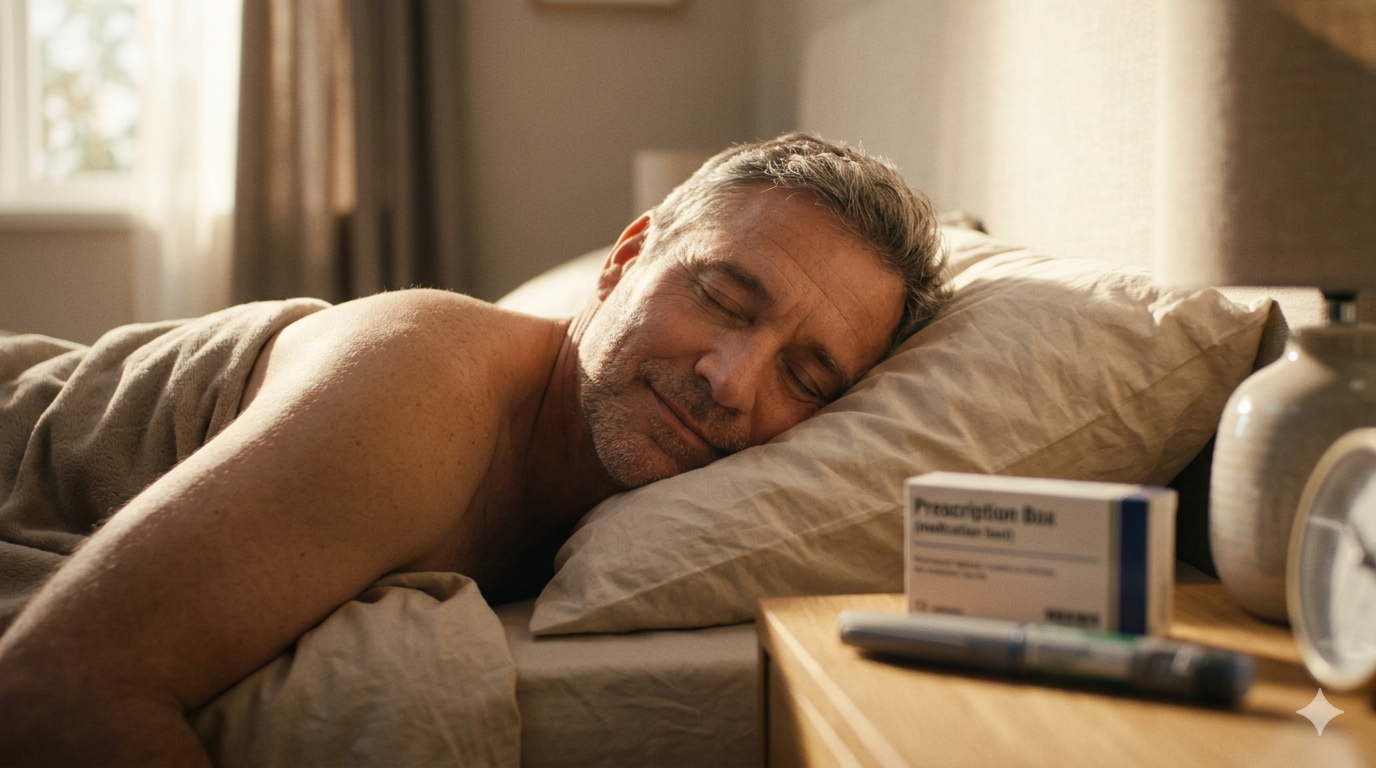
Mounjaro sleep apnoea treatment may help some adults with obesity and moderate to severe obstructive sleep apnoea, but it is not a replacement for proper diagnosis, sleep testing or personalised medical and dental care. In Australia, Mounjaro, also known by its active ingredient tirzepatide, is now indicated for the treatment of moderate to severe obstructive sleep apnoea in adults with obesity, according to the Therapeutic Goods Administration.
At Cairns Family & Cosmetic Dental Group, we do not prescribe Mounjaro. However, we do help patients understand the dental side of sleep apnoea care, including oral appliances, jaw positioning, airway support and collaboration with medical practitioners. This guide explains how Mounjaro may help sleep apnoea, where dental sleep medicine fits in, what risks to consider, and when to speak with your GP, sleep physician or dentist.
Quick Answers About Mounjaro and Sleep Apnoea
Can Mounjaro help sleep apnoea?
Yes, Mounjaro may help some adults with obesity and moderate to severe obstructive sleep apnoea by supporting weight loss, which may reduce pressure around the airway. It is not suitable for every patient and should only be used under medical supervision.
Is Mounjaro approved for sleep apnoea in Australia?
Yes. The TGA states that Mounjaro is indicated for moderate to severe obstructive sleep apnoea in adults with obesity. This Australian registration decision was listed with a decision date of 27 May 2025 and date registered of 2 June 2025.
Can a dentist prescribe Mounjaro for sleep apnoea?
No. Mounjaro is a prescription medicine managed by medical practitioners, such as GPs or specialists. Dentists may help with oral appliance therapy for suitable patients, usually as part of a team approach with a medical practitioner.
Do I still need CPAP or an oral appliance if I use Mounjaro?
Possibly. Some patients may still need CPAP, an oral appliance, lifestyle changes or other treatment. Mounjaro targets weight-related factors, but sleep apnoea can also be caused by airway anatomy, jaw position, nasal obstruction and other factors.
What should I do first if I think I have sleep apnoea?
Start with a proper diagnosis. The Australian Dental Association states that initial diagnosis of sleep apnoea must be made by an appropriate medical practitioner, while dental appliance therapy should be managed by a dentist when required.
What Is Obstructive Sleep Apnoea?
Obstructive sleep apnoea, often shortened to OSA, happens when the upper airway repeatedly narrows or closes during sleep. This can cause breathing pauses, oxygen drops, snoring, gasping, restless sleep and daytime tiredness.
Common signs include:
- Loud snoring
- Waking up choking or gasping
- Morning headaches
- Dry mouth on waking
- Poor concentration
- Daytime sleepiness
- Irritability or low mood
- Waking unrefreshed despite enough hours in bed
- A partner noticing breathing pauses
Sleep apnoea is not just a snoring problem. Untreated OSA has been linked with broader health concerns, including high blood pressure, cardiovascular disease, stroke risk and reduced quality of life. The Australian Dental Association notes that sleep-disordered breathing can seriously interfere with general health and quality of life.
What Is Mounjaro?
Mounjaro is the brand name for tirzepatide. It is a prescription injection that acts on two hormone pathways, GLP-1 and GIP, involved in appetite, food intake and blood sugar regulation. It was already known in Australia for type 2 diabetes and chronic weight management before its obstructive sleep apnoea indication was added.
The RACGP reported in June 2025 that tirzepatide, sold as Mounjaro, could be prescribed by GPs for obstructive sleep apnoea after the TGA expanded the approved indications to include moderate to severe OSA in adults living with obesity.
How does Mounjaro work for sleep apnoea?
Mounjaro does not open the airway in the same direct way as CPAP or a mandibular advancement appliance. Instead, it may improve OSA by helping reduce body weight. Weight loss may reduce pressure on the chest and abdomen and may reduce excess fatty tissue around the neck and throat. The RACGP article reports that this weight reduction pathway is the drug’s role in OSA treatment.
In simple terms:
| Treatment | Main way it helps |
| CPAP | Uses air pressure to keep the airway open |
| Oral appliance | Holds the lower jaw forward to widen the airway |
| Mounjaro | Supports weight loss, which may reduce airway narrowing in some adults with obesity |
| Lifestyle changes | May reduce risk factors such as weight, alcohol use and poor sleep habits |
| Surgery | May address selected anatomical blockages |
Can Mounjaro Help Sleep Apnoea?
Short answer
Mounjaro can help some adults with obesity and moderate to severe obstructive sleep apnoea, but it is not a universal sleep apnoea cure. It is most relevant when excess weight is a major contributor to airway collapse.
The University of the Sunshine Coast reported that the TGA indicated Mounjaro can be used to treat moderate to severe OSA in adults with obesity, defined as a body mass index of 30 or above. The same article explains that obesity can increase OSA risk by adding fat around the neck, narrowing the airway and affecting breathing during sleep.
Why does weight matter in sleep apnoea?
Weight can affect sleep apnoea in several ways:
- Extra tissue around the neck can narrow the airway.
- Abdominal weight can affect breathing mechanics.
- Inflammation and metabolic changes may affect sleep quality.
- Fatigue from poor sleep can make weight management harder.
- OSA and obesity can reinforce each other over time.
However, not all sleep apnoea is caused by weight. Some patients have OSA because of jaw structure, tongue position, soft palate size, nasal obstruction, enlarged tonsils or other airway features. This is why a dentist, GP and sleep physician may each play a different role in care.
Mounjaro for Sleep Apnoea vs CPAP vs Oral Appliances
Patients often ask whether weight loss injections sleep apnoea Australia options mean they can avoid CPAP or dental devices. The honest answer is: sometimes, but not always.
CPAP
CPAP stands for continuous positive airway pressure. It uses a machine and mask to deliver air pressure that keeps the airway open during sleep. CPAP is often used for moderate to severe sleep apnoea and can be very effective when used consistently.
Oral appliances
Oral appliances, also called mandibular advancement splints or mandibular advancement devices, look a little like a mouthguard. They gently hold the lower jaw forward during sleep to help keep the airway open.
The Sleep Health Foundation says oral appliances are used for people with mild to moderate sleep apnoea or those who cannot use CPAP, and that they should be fitted specifically by a dentist rather than bought over the counter.
Mounjaro
Mounjaro may help reduce sleep apnoea severity in eligible adults with obesity by supporting weight loss. It is a medical prescription treatment, not a dental appliance or mechanical airway treatment.
Comparison table
| Option | Best suited for | Main benefit | Main limitation |
| CPAP | Many moderate to severe OSA cases | Very direct airway support | Some people find the mask hard to tolerate |
| Oral appliance | Snoring, mild to moderate OSA, selected CPAP-intolerant patients | Portable, quiet, custom fitted | May not fully control severe OSA |
| Mounjaro | Adults with obesity and moderate to severe OSA, if medically suitable | Targets weight-related OSA drivers | Prescription medicine with side effects and eligibility limits |
| Lifestyle changes | Most OSA patients as supportive care | Improves broader health | Often not enough alone for moderate to severe OSA |
| Surgery | Selected anatomical cases | Can address structural blockage | Not suitable for everyone |
Where Does a Dentist Fit Into Mounjaro Sleep Apnoea Care?
Dentists do not diagnose sleep apnoea or prescribe Mounjaro, but we can support part of the treatment pathway when an oral appliance is appropriate.
The Australian Dental Association’s policy on oral appliances states that diagnosis and prescriptions for sleep-disordered breathing therapy require careful assessment by a medical practitioner, while dentists are qualified to manage oral appliance therapy. It also says a team approach is essential.
At Cairns Family & Cosmetic Dental Group, we take that team-based role seriously. Our focus is on the mouth, jaw, bite, teeth, soft tissues and appliance suitability. If you have symptoms of sleep apnoea, we may recommend medical assessment or work alongside your GP, sleep physician or respiratory physician.
Dental signs that may raise sleep apnoea questions
During routine care, dentists may notice signs that suggest a patient should discuss sleep breathing with a medical practitioner. These may include:
- Tooth wear from grinding
- Jaw muscle tenderness
- Dry mouth
- Enlarged tongue impressions
- Narrow dental arches
- Reports of snoring
- Morning headaches
- Worn or broken restorations from clenching
- A history of poor sleep or daytime fatigue
These signs do not diagnose OSA. They are prompts to ask better questions and guide patients toward appropriate care.
How Oral Appliances May Help Sleep Apnoea
At our Cairns practice, oral appliances may be discussed for suitable patients who have been assessed medically. A custom oral appliance positions the lower jaw forward to help reduce airway collapse.
Cairns Family & Cosmetic Dental Group’s sleep information explains that custom fitted oral appliances are similar to a mouthguard, are fitted to the mouth, and gently position the lower jaw forward to help prevent soft tissue collapse that can contribute to snoring and airway obstruction.
Who may suit an oral appliance?
An oral appliance may suit patients who:
- Have mild to moderate OSA
- Snore regularly
- Cannot tolerate CPAP
- Travel often and want a portable option
- Have healthy teeth and gums to support the appliance
- Prefer a non-machine option after medical advice
- Need combination therapy with other treatments
Who may not suit an oral appliance?
An oral appliance may not suit everyone. Extra assessment may be needed if you have:
- Severe untreated OSA
- Significant gum disease
- Very loose teeth
- Jaw joint problems
- Too few teeth to support the appliance
- Complex bite issues
- Central sleep apnoea rather than obstructive sleep apnoea
The Sleep Health Foundation notes that oral appliances usually improve sleep apnoea but may not completely stop it, and CPAP may be better for some moderate or severe cases.
Tirzepatide Sleep Apnoea Treatment: What the Research Means
Tirzepatide sleep apnoea treatment has attracted attention because it is the first medication approved for OSA in specific adults with obesity in the United States, and Mounjaro now has an Australian OSA indication.
The FDA approved Zepbound, another tirzepatide brand used in the United States, for moderate to severe OSA in adults with obesity in December 2024. The FDA stated it should be used with a reduced-calorie diet and increased physical activity.
The FDA approval was based on two randomised, double-blind, placebo-controlled studies involving 469 adults without type 2 diabetes. Participants received tirzepatide or placebo once weekly for 52 weeks, and the primary measure was change in the apnea-hypopnea index, which counts breathing pauses or shallow breathing events per hour of sleep.
The FDA reported that patients receiving tirzepatide had a statistically significant and clinically meaningful reduction in apnea or hypopnea events compared with placebo, and the improvement was likely related to body weight reduction.
What does that mean for patients?
It means Mounjaro may be an important option for some people whose OSA is strongly linked with obesity. It does not mean every patient with snoring or fatigue should start weight loss injections. Proper sleep testing, medical review and risk assessment remain essential.
Is Mounjaro a Cure for Sleep Apnoea?
No. Mounjaro should not be described as a guaranteed cure for sleep apnoea. It may reduce OSA severity in eligible adults with obesity, but ongoing monitoring is still needed.
Sleep apnoea can involve several overlapping causes:
- Weight-related airway narrowing
- Jaw size and position
- Tongue position
- Soft palate anatomy
- Nasal obstruction
- Alcohol or sedative use
- Sleep position
- Age-related muscle changes
- Medical conditions
If weight is only one part of your sleep apnoea, weight loss alone may not fully control the condition. Some patients may still need CPAP, an oral appliance, positional therapy, ENT review or other support.
Who Might Be Eligible for Mounjaro for Sleep Apnoea?
Based on the Australian indication, Mounjaro for sleep apnoea is relevant to adults with obesity and moderate to severe obstructive sleep apnoea. The TGA registration lists the indication as treatment of moderate to severe OSA in adults with obesity.
A medical practitioner may consider factors such as:
- Sleep study results
- OSA severity
- BMI and weight-related health risks
- Type 2 diabetes status
- Current medications
- Pregnancy plans
- Mental health history
- Gallbladder or pancreas history
- Kidney function
- Prior weight loss treatment
- Ability to follow nutrition and activity advice
This decision belongs with your GP, endocrinologist, sleep physician or another appropriately qualified medical practitioner.
Who Should Be Careful With Mounjaro?
Mounjaro is a prescription medicine and may not suit everyone. The FDA lists possible side effects for tirzepatide, including nausea, diarrhoea, vomiting, constipation, abdominal discomfort, injection site reactions, fatigue, allergic reactions, burping, hair loss and reflux. It also lists warnings involving pancreatitis, gallbladder problems, low blood sugar in some patients, kidney injury, diabetic retinopathy in people with type 2 diabetes, suicidal behaviour or thinking, and pulmonary aspiration during general anaesthesia or deep sedation.
In Australia, the TGA has also updated contraception advice for Mounjaro. Its safety update says reduced effectiveness of oral contraception during initiation or dose escalation could not be ruled out, and patients are advised to use a non-oral contraceptive or add a barrier method for four weeks after starting and after each dose escalation.
This is one reason a full medical review is important before starting treatment.
Why Sleep Testing Still Matters
A common mistake is assuming that snoring automatically means sleep apnoea, or that feeling tired automatically means you need Mounjaro. Diagnosis matters because different sleep disorders need different treatments.
A sleep study can help identify:
- Whether you have OSA
- Whether it is mild, moderate or severe
- How often breathing events occur
- Whether oxygen levels drop
- Whether symptoms match the sleep data
- Whether CPAP, oral appliance therapy or other care may be suitable
Cairns Family & Cosmetic Dental Group’s sleep information notes that the clinic works closely with a local sleep, respiratory and general physician who can offer diagnostic services and help manage sleep and breathing problems, including obstructive sleep apnoea, snoring and insomnia.
Weight Loss Injections Sleep Apnoea Australia: What Patients Should Ask
If you are researching weight loss injections sleep apnoea Australia options, bring your questions to a medical practitioner. It helps to be specific.
Ask your GP or sleep physician:
- Do I have obstructive sleep apnoea or another sleep condition?
- Is my OSA mild, moderate or severe?
- Is my weight likely to be a major cause of my OSA?
- Am I eligible for Mounjaro under the Australian indication?
- What side effects are relevant to my medical history?
- Will I still need CPAP or an oral appliance?
- How will treatment success be measured?
- Will I need a repeat sleep study?
- What happens if I stop the medication?
- What nutrition, exercise or behavioural support should I use as well?
Ask your dentist:
- Are my teeth and gums suitable for an oral appliance?
- Could my jaw or bite affect my airway?
- Do I show signs of grinding or clenching?
- Would an oral appliance be appropriate after medical diagnosis?
- How is the device fitted and adjusted?
- How often would my bite and jaw joints need review?
- Can I use an oral appliance alongside medical weight management?
Can Mounjaro and an Oral Appliance Work Together?
They may be used together in some treatment plans, depending on the patient. For example, a patient with moderate OSA and obesity may be prescribed Mounjaro by a GP or specialist while also using CPAP or an oral appliance. Another patient may start with CPAP and later be reviewed for an oral appliance if they cannot tolerate the machine.
Combination care can make sense because OSA often has more than one cause. Weight loss may reduce airway pressure, while an oral appliance may help position the jaw and tongue more favourably during sleep.
Real-world example
A Cairns patient may come to us saying, “My GP mentioned Mounjaro for sleep apnoea, but I hate my CPAP mask.” In that situation, we would not advise stopping CPAP or starting medicine. Instead, we would encourage the patient to stay under medical care, review sleep study results and discuss whether a custom oral appliance could be part of their plan.
Costs: What Should Cairns Patients Expect?
The cost of sleep apnoea care can vary depending on the treatment pathway. Mounjaro is a private prescription medicine unless subsidised for a specific indication, and PBS status can change, so patients should check directly with their prescriber and pharmacist.
The RACGP reported in June 2025 that Mounjaro was not available through the PBS at that time and that the recommended private prescription price began at $395 per month for the initiation dose. More recently, the PBS Medicine Status Website listed tirzepatide for type 2 diabetes as not recommended from the November 2024 PBAC meeting and showed the medicine had not been listed on the PBS as of the page update on 30 April 2026.
Other possible costs may include:
- GP or specialist appointments
- Sleep study fees
- CPAP machine and mask
- Oral appliance consultation and fitting
- Dental records or scans
- Follow-up sleep testing
- Appliance adjustments
- Review appointments
- Lifestyle or dietetic support
For dental care, the cost depends on whether you need assessment, oral appliance therapy, general dental treatment first, or monitoring over time.
What Happens During a Dental Sleep Consultation?
A dental sleep consultation is not the same as a medical sleep diagnosis. It focuses on whether your mouth, teeth and jaw can support oral appliance therapy.
A dental review may include:
- Discussion of sleep symptoms
- Review of medical diagnosis or sleep study results
- Assessment of teeth and gums
- Bite and jaw joint examination
- Checking for grinding or clenching
- Looking at tongue space and soft tissues
- Discussing appliance comfort and fit
- Explaining risks such as bite changes or jaw discomfort
- Coordinating with your medical practitioner if needed
Our advanced dental technology supports patient care with tools such as digital X-rays and modern clinical systems. Cairns Family & Cosmetic Dental Group states that its technology is intended to reduce treatment times, minimise discomfort and support patient outcomes.
Dentists, Doctors and Sleep Physicians: Why Team Care Matters
Sleep apnoea sits between medicine and dentistry. The airway is medical. The jaw, teeth and oral appliance are dental. Weight management may involve a GP, endocrinologist, dietitian or specialist. CPAP may involve a sleep physician or respiratory team.
A team approach helps avoid common problems such as:
- Treating snoring without checking for OSA
- Using an oral appliance when CPAP is more appropriate
- Relying only on weight loss when airway anatomy is still a problem
- Starting medication without a plan to measure sleep improvement
- Ignoring gum disease, tooth wear or jaw joint symptoms
- Stopping treatment too early because symptoms improve
At our practice, patients can meet our dentists and learn about the team’s experience across general, restorative and patient-centred care. Our team includes clinicians with interests in restorative dentistry, crowns, bridges, preventive care and patient comfort, all of which can matter when planning oral appliance suitability.
Mounjaro Sleep Apnoea FAQs
Can Mounjaro help snoring?
It may help snoring if excess weight is contributing to airway narrowing, but snoring can have other causes. A sleep assessment is important because snoring may or may not mean sleep apnoea.
Is Mounjaro better than CPAP?
Not necessarily. CPAP directly keeps the airway open, while Mounjaro works mainly through weight loss. Some patients may need one, the other or both.
Is tirzepatide sleep apnoea treatment available in Australia?
Yes, Mounjaro is now indicated in Australia for moderate to severe obstructive sleep apnoea in adults with obesity. It must be prescribed and monitored by a medical practitioner.
Can dentists help with sleep apnoea?
Dentists can help with oral appliance therapy when it is prescribed or recommended as part of an appropriate sleep apnoea treatment plan. The initial diagnosis must be made by a medical practitioner.
Should I stop CPAP if I lose weight on Mounjaro?
Do not stop CPAP or any prescribed treatment without speaking with your medical practitioner. You may need repeat sleep testing to confirm whether your OSA has improved enough to change treatment.
Final Thoughts: Can Mounjaro Help Sleep Apnoea?
Mounjaro may help some adults with obesity and moderate to severe obstructive sleep apnoea, especially when excess weight is a major driver of airway collapse. It is now indicated in Australia for that group, but it is still a prescription medicine that requires medical assessment, monitoring and discussion of risks.
For many patients, sleep apnoea care is not one treatment. It may involve sleep testing, CPAP, oral appliance therapy, weight management, medical review, dental assessment and long-term follow-up. Dentists do not prescribe Mounjaro, but we can help with the oral appliance side of care when it is suitable and medically guided.At Cairns Family & Cosmetic Dental Group, we support patients with comfortable, personalised dental care and can discuss whether your teeth, gums and jaw may be suitable for a custom oral appliance. To explore your dental sleep options, contact our team or book an appointment with one of our Cairns dentists.