
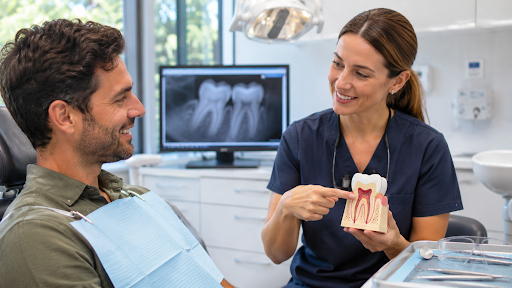
How Long Does Root Canal Treatment Take?
If your dentist has recommended root canal treatment, one of your first questions might be how much time you need to set aside.
Most root canal appointments take around 60 to 120 minutes, although some procedures may take longer. Depending on the tooth, the extent of infection and the complexity of treatment, you may need one appointment or several visits.
The time needed for a root canal procedure isn’t the same for everyone. Treating a front tooth with one root canal may be more straightforward than treating a back molar with several canals.
Understanding what happens during treatment can make planning your appointment easier. Here’s what affects the timing, what the procedure involves and what to expect afterwards.
How Long Does a Root Canal Take on Average?
A typical root canal appointment takes approximately one to two hours. However, this is only a general guide.
Some straightforward cases can be completed in one visit, while more complicated teeth may need additional appointments.
The type of tooth can influence treatment time:
- Front teeth: Often have one root canal, making treatment relatively straightforward.
- Premolars: May have one or two canals, although their anatomy can vary.
- Molars: Usually have multiple canals that need careful cleaning and sealing, which may take longer.
Your dentist can provide a more accurate time estimate after examining the tooth and reviewing any necessary X-rays.
At Cairns Family & Cosmetic Dental Group, patients can arrange an assessment to discuss their symptoms and find out whether root canal treatment may be appropriate.
What Factors Affect Root Canal Treatment Time?
Two people having root canal treatment may spend very different amounts of time in the dental chair.
Several factors can influence how long the procedure takes.
The Number of Root Canals
Every tooth contains an internal space with soft tissue called the pulp, which includes nerves and blood vessels.
Some teeth have one canal, while others have several. During root canal treatment, the canals must be located, cleaned, shaped and sealed.
A molar with multiple canals generally requires more work than a tooth with a single canal.
The Extent of Infection
If the pulp is severely inflamed or infected, treatment may require additional cleaning or more than one appointment.
In some cases, your dentist may place medication inside the tooth between visits before completing the root canal filling.
The number of appointments depends on the clinical findings and how treatment progresses.
The Shape of the Canals
Root canals aren’t always straight.
Some are narrow, curved or difficult to access. Others may contain calcified areas that make cleaning more challenging.
These variations can increase the time needed to complete treatment.
Previous Dental Treatment
A tooth with an existing crown, large filling or previous root canal treatment may require extra assessment and preparation.
If an earlier root canal needs retreatment, removing existing filling materials and accessing the canals can also add time.
Your dentist may recommend further assessment or referral to an endodontist, a dentist who specialises in root canal treatment, for more complex cases.
What Are the Stages of Root Canal Treatment?
The root canal procedure involves several steps. Understanding these stages can help explain why appointments take time.
The Australian Dental Association’s information on root canal treatment outlines the process of removing affected pulp tissue, disinfecting the canals and restoring the tooth.
Stage 1: Examination and X-Rays
Before treatment begins, your dentist examines the affected tooth and may take X-rays.
These help assess the tooth’s roots, surrounding bone and possible signs of infection.
Your dentist will also discuss whether root canal treatment is appropriate and explain your options.
Stage 2: Numbing the Area
Local anaesthetic is usually administered to numb the tooth and surrounding tissues.
You may still notice pressure or movement during treatment, but the anaesthetic is intended to control pain.
Your dentist will check that the area is adequately numb before proceeding. If you experience discomfort, let your dentist know.
Stage 3: Accessing the Root Canals
A small opening is made in the tooth to reach the pulp chamber.
A protective sheet called a rubber dam is generally placed around the tooth to keep the treatment area isolated and reduce contamination from saliva.
This helps maintain a clean working environment during the procedure.
Stage 4: Cleaning and Shaping
The inflamed or infected pulp tissue is removed.
Your dentist then uses specialised instruments and cleaning solutions to clean, disinfect and shape the canals.
This stage can take considerable time, especially when the tooth has several narrow or curved canals.
Stage 5: Filling and Sealing
Once the canals have been appropriately cleaned and prepared, they’re usually filled with a specialised dental material and sealed.
A temporary or permanent restoration is then placed to close the opening in the tooth.
Depending on the condition of the remaining tooth structure, a crown or another restoration may be recommended afterwards.
Can Root Canal Treatment Be Completed in One Visit?
Yes, some root canal treatments can be completed during a single appointment.
This may be possible when the canals are accessible, the treatment is relatively straightforward and your dentist can complete the necessary cleaning and sealing.
Other cases require two or more visits.
For example, the first appointment may involve removing infected tissue, cleaning the canals and placing medication or a temporary filling.
At a later appointment, your dentist may complete the canal filling and sealing.
According to Healthdirect Australia’s guidance on root canal treatment, patients may need more than one appointment with their dentist or an endodontist to complete the procedure.
Needing another visit doesn’t automatically mean something has gone wrong. Your dentist will recommend an approach based on the tooth’s condition and treatment requirements.
Does Getting a Crown Add More Time?
Root canal treatment and the final restoration are related, but they’re not always completed during the same appointment.
Teeth that have undergone root canal treatment may need additional protection, particularly back teeth that experience considerable chewing pressure.
A dental crown may be recommended if the remaining tooth structure needs support.
At Cairns Family & Cosmetic Dental Group, same-day CEREC crown technology is available at its Earlville and Mount Sheridan clinics for suitable patients.
However, whether a crown can be completed on the same day as root canal treatment depends on the individual case, the condition of the tooth and the treatment required.
Your dentist can explain whether a filling, crown or another restoration is appropriate and how many appointments may be needed.
What Should You Expect After Root Canal Treatment?
You can generally return to many normal activities after treatment, although some precautions may be necessary.
Your mouth may remain numb for several hours. Avoid chewing until the numbness has worn off to reduce the chance of accidentally biting your cheek or tongue.
Some tenderness around the treated tooth is also possible, particularly when chewing. Mild discomfort often settles over the following days, although recovery times vary.
If a temporary filling has been placed, avoid biting hard or sticky foods on that tooth until your dentist advises otherwise.
Your dentist may also recommend appropriate pain relief and provide instructions for caring for the treated tooth.
Contact your dentist promptly if you experience:
- Pain that becomes more severe or doesn’t improve.
- Persistent or increasing swelling.
- A temporary filling that becomes loose or falls out.
- Discomfort that makes biting or chewing difficult.
Significant facial swelling, particularly with fever, requires urgent assessment. If swelling is accompanied by difficulty breathing or swallowing, seek emergency medical attention.
Planning Your Root Canal Appointment in Cairns
If you’re arranging treatment around work, school or family responsibilities, ask about the expected appointment length when booking.
At Cairns Family & Cosmetic Dental Group, patients can discuss root canal treatment at the practice’s locations in Earlville Shopping Town and Mount Sheridan Plaza.
The dental team at Cairns Family & Cosmetic Dental Group can assess the affected tooth, explain the proposed treatment and discuss whether additional appointments or restorative care may be necessary.
Before your appointment, you may want to ask:
- How long is my root canal appointment expected to take?
- Will I need one visit or several?
- Is a filling or crown likely to be required afterwards?
- Will I need time off work or other activities?
- Are there any instructions I should follow before or after treatment?
Although appointment times vary, understanding the treatment plan beforehand can help you organise your schedule without unnecessary guesswork.
Understanding Your Root Canal Treatment Timeline
Root canal treatment often takes around one to two hours per appointment, but the total time depends on the tooth and the care required.
Some patients need one visit, while others need several appointments to complete the treatment and final restoration.
If you have ongoing tooth pain, sensitivity or swelling, arrange a dental assessment rather than waiting for symptoms to become more severe.
At Cairns Family & Cosmetic Dental Group, our dentists can examine your tooth, explain your treatment options and provide an estimated appointment timeframe based on your individual needs.
To discuss your symptoms or arrange an assessment, contact Cairns Family & Cosmetic Dental Group or book at your preferred location:
A dental examination will help determine whether root canal treatment is suitable and what care may be required.
FAQs
How long does a root canal take for a back tooth?
Back teeth, particularly molars, often take longer because they usually have multiple canals. An appointment may take 90 minutes to two hours or longer, depending on the tooth’s anatomy, condition and treatment complexity. Your dentist can provide a more accurate estimate after examining the tooth.
Can a root canal be completed in 30 minutes?
Some straightforward stages of root canal treatment may take less time, but completing an entire procedure in 30 minutes isn’t typical. Most appointments are scheduled for longer to allow sufficient time for cleaning, shaping and sealing the canals. The actual duration depends on the individual tooth.
Is root canal treatment painful?
Local anaesthetic is normally used to numb the area and help manage discomfort during root canal treatment. You may notice pressure or movement, and some tenderness afterwards is possible. If you feel pain during treatment, let your dentist know so they can assess the situation.
How many appointments are needed for root canal treatment?
Some root canals can be completed in one appointment, while others require two or more visits. The number depends on factors such as the tooth’s anatomy, the extent of infection and whether additional treatment is necessary. Your dentist will explain the expected treatment schedule following an assessment.
How soon can I eat after root canal treatment?
Wait until the local anaesthetic has worn off before chewing to avoid accidentally biting your tongue or cheek. If you have a temporary filling, avoid hard or sticky foods on the treated tooth and follow your dentist’s specific instructions. Softer foods may be more comfortable initially.