
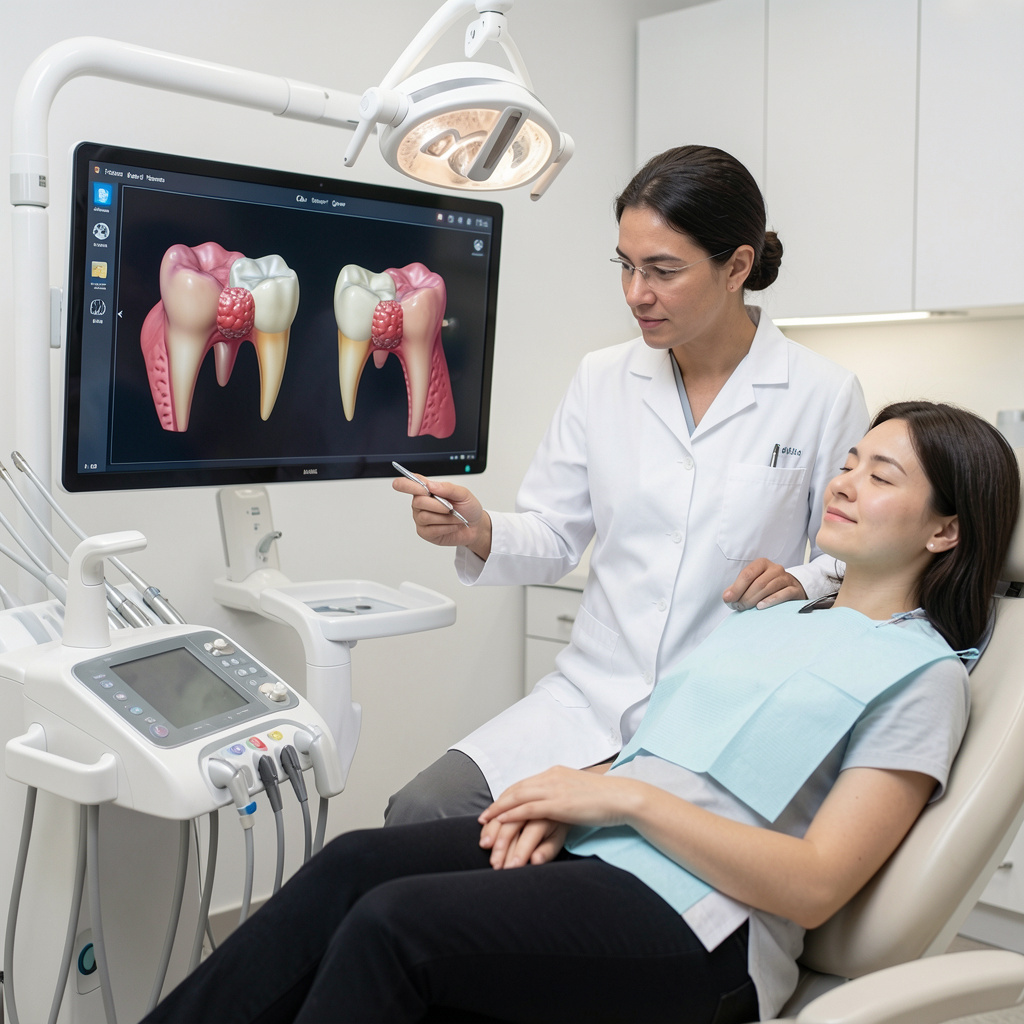
If your dentist has recommended a dental crown, you may be comparing a same-day crown with a traditional crown and wondering which option is more suitable.
The answer depends on several factors, including:
- The condition and position of the tooth
- How your upper and lower teeth meet
- The amount of healthy tooth structure remaining
- The crown material required
- Your appearance and functional goals
- The technology available at the dental practice
- Your dentist’s findings and recommendations
A dental crown is a custom-made covering placed over a prepared tooth. Crowns may be recommended for teeth that are badly broken, cracked, decayed, heavily filled or weakened after root canal treatment. They can help protect the remaining tooth structure while restoring the tooth’s shape and function.
According to Healthdirect’s information about dental crown procedures, crowns may be made from materials such as porcelain, zirconia, gold alloy or a combination of porcelain and metal.
For patients considering crown treatment in Mount Sheridan, Earlville or surrounding areas, Cairns Family & Cosmetic Dental Group can assess the tooth and explain which type of restoration may be appropriate.
The main difference between a same-day crown and a traditional crown is how the restoration is made and how many appointments are generally required. Treatment suitability and results depend on an individual dental assessment.
What Is a Same-Day Crown?
A same-day crown is a dental crown that can be digitally designed, manufactured and fitted during one appointment when the tooth is suitable.
Many same-day crowns are created using computer-aided design and manufacturing technology, commonly known as CAD/CAM. Systems such as CEREC generally involve:
- Preparing the tooth
- Capturing a digital scan
- Designing the crown using specialised software
- Milling the crown from a block of dental material
- Checking the crown’s fit, bite and appearance
- Bonding or cementing the crown onto the tooth
Patients may also hear same-day crowns described as:
- CEREC crowns
- One-visit crowns
- Chairside crowns
- Digital dental crowns
- Same-day ceramic crowns
The main practical benefit is that the final crown may be completed without a second appointment or temporary crown. However, completing treatment quickly is not the only consideration.
Your dentist must still determine whether the available material, digital workflow and crown design are appropriate for the tooth. You can read more about same-day dental crowns and CEREC treatment at Cairns Family & Cosmetic Dental Group.
What Is a Traditional Dental Crown?
A traditional dental crown is usually completed over two appointments.
The First Appointment
During the first visit, the dentist prepares the tooth so the crown can fit over it. This generally involves removing damaged or weakened areas and reshaping the remaining tooth structure.
The dentist then takes either a physical impression or a digital scan. This information is sent to a dental laboratory, where a dental technician creates the crown.
Before you leave, the dentist will usually place a temporary crown to protect the prepared tooth.
The Second Appointment
At the second visit, the temporary crown is removed. The permanent crown is checked for:
- Fit around the prepared tooth
- Contact with neighbouring teeth
- Bite alignment
- Shape and comfort
- Colour match, where relevant
- Fit around the gumline
The crown may be adjusted before it is bonded or cemented into place.
Traditional crowns take longer to complete, but this does not make them outdated or less appropriate. Laboratory involvement can provide additional options for materials, layering, characterisation and colour matching in cases where detailed customisation is required.
The Australian Dental Association’s information about dental crowns explains that crown treatment often takes two appointments, although some dentists can provide same-day crowns from start to finish in one day.
Same-Day Crown vs Traditional Crown: The Main Differences
Both options can be used to restore and protect damaged teeth. The comparison is not simply about new technology versus an older process.
The main differences relate to timing, workflow, temporary restorations, manufacturing methods and the materials available.
Number of Appointments
A same-day crown can often be completed during one longer appointment.
This may be helpful for patients who:
- Have limited time away from work
- Find it difficult to attend multiple appointments
- Travel a considerable distance to the dental practice
- Prefer to complete treatment in one visit
- Want to avoid wearing a temporary crown
A traditional crown usually requires two appointments, with time between visits for the dental laboratory to manufacture the restoration.
Appointment convenience is worth considering, but it should not outweigh the clinical needs of the tooth.
Temporary Crowns
A temporary crown is generally fitted during traditional crown treatment. It protects the prepared tooth while the dental laboratory makes the final crown.
Temporary crowns are intended for short-term use. They may feel different from the natural tooth and can require additional care while eating and cleaning.
Patients with a temporary crown may be advised to:
- Avoid very hard or sticky foods
- Chew carefully on the treated side
- Clean around the temporary restoration as instructed
- Contact the practice if the crown becomes loose or comes off
A temporary crown is often unnecessary with a same-day procedure because the final restoration is designed, made and fitted during the same visit.
However, a temporary restoration may still be required if same-day treatment cannot be completed as planned.
Impressions and Digital Scans
Traditional crown treatment may use either a physical impression or a digital scan, depending on the practice, restoration and clinical circumstances.
Same-day crowns generally rely on digital scanning. An intraoral scanner captures images of the prepared tooth, surrounding teeth and bite. These images are used to produce a three-dimensional digital model.
Some patients find digital scanning more comfortable than traditional impression trays. However, both methods can be appropriate when performed accurately.
The important consideration is whether the information captured allows the crown to fit the prepared tooth, contact the surrounding teeth appropriately and align with the patient’s bite.
How the Crown Is Made
A same-day crown is made inside the dental practice using a milling unit. The restoration is generally milled from a block of ceramic or another material compatible with the practice’s system.
Depending on the material, the crown may also be polished, stained, glazed or fired before it is fitted.
A traditional crown is made outside the practice by a dental laboratory. A dental technician may shape, layer, characterise and colour-match the restoration according to the dentist’s instructions.
Same-day ceramic crowns may be suitable for many single-tooth restorations. A laboratory-made crown may be recommended when the case requires:
- A different crown material
- Detailed colour matching
- Additional surface characterisation
- Complex bite planning
- Multiple connected restorations
- Close collaboration with a dental technician
Neither manufacturing process is automatically better. The most appropriate method depends on the tooth and the treatment plan.
Crown Materials
The materials available for same-day and traditional crowns may differ.
Same-day systems commonly use millable ceramic materials. Traditional laboratory-made crowns may be produced from a wider range of materials, depending on the laboratory and clinical requirements.
Material selection can be influenced by:
- Whether the tooth is at the front or back of the mouth
- The amount of pressure placed on the tooth
- Teeth grinding or clenching
- The thickness of the available tooth structure
- Appearance and colour-matching requirements
- The condition of the opposing teeth
- The dentist’s clinical assessment
Your dentist should explain which material is being recommended and why it may be suitable for your circumstances.
What Does a CEREC Crown Comparison Involve?
Comparing a CEREC crown with a laboratory-made crown involves more than considering the speed of treatment.
Although CEREC technology can allow suitable crowns to be completed in one appointment, your dentist also needs to consider:
- The location of the tooth
- The amount of healthy tooth structure remaining
- The condition of the tooth and surrounding gums
- Your bite and chewing forces
- Whether you grind or clench your teeth
- Whether the tooth has had root canal treatment
- The available crown materials
- The level of colour matching required
- Whether the restoration is primarily functional, cosmetic or both
- Whether laboratory involvement may offer advantages
The dentists and clinical team can assess these factors and explain the possible benefits and limitations of each option.
A same-day crown can be convenient, but convenience should not take priority over appropriate planning and material selection.
When Might a Same-Day Crown Be Considered?
A same-day crown may be considered when the tooth can be restored using the available material and is suitable for a digital chairside workflow.
It may be an option for patients who:
- Prefer fewer dental appointments
- Want to avoid a temporary crown
- Need a single crown
- Find repeat visits difficult to arrange
- Are suitable for an in-practice ceramic restoration
- Have a tooth that can be scanned and restored predictably
A same-day crown may not be suitable when the tooth requires a material that cannot be manufactured by the practice’s milling system or when the restoration needs additional laboratory customisation.
An assessment is required before your dentist can determine whether same-day treatment is appropriate.
When Might a Traditional Crown Be Recommended?
A traditional crown may be recommended when laboratory involvement or a broader choice of materials would be beneficial.
This may apply when:
- Detailed colour matching is required
- The crown will be highly visible when smiling
- The bite requires complex planning
- A particular crown material has been recommended
- Several crowns are being completed together
- The restoration has complex functional requirements
- The dentist wants input from a dental technician
- The shape or appearance requires additional customisation
A laboratory-made crown is not inferior because it takes longer. In some situations, the additional production time allows the dental technician and dentist to refine the design, material and appearance.
Is One Type of Crown Better Than the Other?
Not in every situation.
A same-day crown may be appropriate when the patient wants fewer appointments and the tooth is suitable for an in-practice restoration.
A traditional crown may be appropriate when laboratory customisation, a particular material or more complex planning is required.
The success and longevity of either option depend on factors such as:
- Appropriate diagnosis and treatment planning
- Careful tooth preparation
- Accurate crown fit
- Suitable material selection
- Bite forces
- Teeth grinding or clenching
- Daily oral hygiene
- Regular dental examinations
Having a crown does not mean the tooth will never require further care. The crown may chip, fracture, become loose or eventually require replacement. The natural tooth beneath the crown can also develop decay.
Healthdirect notes that possible complications can include a crown becoming loose or damaged, decay around or beneath the crown and discomfort if the restoration does not fit correctly.
How Should You Care for a Dental Crown?
Same-day and traditional crowns require ongoing care.
Helpful habits include:
- Brushing twice each day with fluoride toothpaste
- Cleaning between the teeth every day
- Cleaning carefully around the crown margin
- Avoiding chewing ice and other very hard objects
- Wearing a night guard or splint if recommended
- Attending regular dental check-ups and professional cleans
- Seeking advice if the crown feels loose, high or uncomfortable
The Better Health Channel’s guidance on teeth and mouth care recommends brushing twice daily and cleaning between teeth where a toothbrush cannot reach.
A crown is not a “set and forget” treatment. The tooth beneath it and the surrounding gums still require regular cleaning and professional monitoring.
Questions to Ask Your Dentist
When comparing a same-day crown with a traditional crown, consider asking:
- Is my tooth suitable for a same-day crown?
- Why is a crown recommended instead of a filling?
- What material do you recommend?
- Why is that material suitable for this tooth?
- Will I need a temporary crown?
- How many appointments will treatment require?
- Is the tooth exposed to heavy bite pressure?
- Will the crown be visible when I smile?
- Do I show signs of grinding or clenching?
- What are the possible risks and limitations?
- How should I care for the crown?
- What costs are involved?
- Are there any suitable alternatives?
These questions can help you understand the treatment plan rather than choosing an option based only on speed or convenience.
Before You Decide
Both same-day and traditional crowns can be used to restore damaged teeth, but they are not interchangeable in every situation.
A one-visit crown may be convenient when the tooth is suitable for digital scanning, chairside manufacturing and the materials available at the practice.
A traditional crown may be preferred when the treatment requires laboratory work, greater material flexibility or detailed customisation.
The appropriate choice depends on your tooth, bite, oral health and treatment goals. Suitability, treatment experience and results vary between patients and can only be determined through an individual assessment.
Book a Dental Crown Assessment in Cairns
If you have a cracked, broken, worn or heavily filled tooth, Cairns Family & Cosmetic Dental Group can assess the tooth and discuss whether a same-day or traditional crown may be appropriate.
You can contact the dental practice to discuss your appointment options, use the online dental booking portal or book directly at the Mount Sheridan practice.
Your dentist can explain the recommended crown material, appointment process, possible risks, costs and ongoing care before you decide whether to proceed.
Frequently Asked Questions
Is a same-day crown as good as a traditional crown?
A same-day crown may provide an appropriate final restoration in many suitable cases. However, its suitability depends on the condition and position of the tooth, the available material, your bite and the treatment goals.
A traditional crown may be recommended when a case requires detailed laboratory customisation, a different material or more complex planning. Neither option is best for every patient.
What is the main difference between a same-day crown and a traditional crown?
The main difference is the manufacturing process.
A same-day crown is digitally designed, made and fitted during one appointment. A traditional crown is generally made by a dental laboratory and fitted at a second appointment.
Do same-day crowns require temporary crowns?
Usually, a temporary crown is not needed because the final restoration is completed during the same appointment.
A temporary restoration may still be required if the treatment cannot be completed that day or your dentist changes the treatment plan after preparing the tooth.
What is a CEREC crown?
A CEREC crown is a type of same-day restoration created using digital scanning, computer-aided design and in-practice milling technology.
CEREC is the name of a particular dental technology system. Your dentist must assess whether the available CEREC material and workflow are appropriate for your tooth.
Does a traditional dental crown last longer?
Not necessarily.
Crown longevity depends on several factors, including:
- The crown material
- The accuracy of the fit
- The condition of the underlying tooth
- Bite pressure
- Grinding or clenching
- Oral hygiene
- Diet and chewing habits
- Regular dental care
- Accidental damage
Your dentist can discuss the likely maintenance requirements and limitations based on your individual circumstances, but a specific lifespan cannot be guaranteed.
Are same-day crowns only suitable for back teeth?
No. Same-day crowns may be used in different areas of the mouth when the tooth, material and appearance requirements are suitable.
However, a laboratory-made crown may be recommended for some front teeth or cases requiring detailed colour matching. An assessment is needed to determine the most appropriate option.
Does getting a dental crown hurt?
A local anaesthetic is commonly used during tooth preparation to help minimise discomfort.
Some temporary tenderness or sensitivity may occur after treatment. Contact your dentist if pain is severe, continues to worsen, does not settle as expected or the crown feels too high when you bite.
Can decay develop beneath a crown?
Yes. The artificial crown material cannot decay, but the natural tooth beneath it can.
Plaque can collect around the crown margin, increasing the risk of decay or gum inflammation. Daily brushing, interdental cleaning and regular dental examinations remain important.
Which dental crown should I choose?
The appropriate crown depends on your tooth and the findings from your dental assessment.
Ask your dentist about the proposed material, number of appointments, need for a temporary crown, likely maintenance, possible risks and whether same-day or laboratory-made treatment is more suitable.